
Camel Nose Pegs - To Use Or Not To Use?
Sep 10, 2021
Updated December 2025
I’m putting myself under a big, bright spotlight here by bringing a much-misunderstood and often-debated topic to the forefront. Whenever animals and welfare are involved, everyone has an opinion—especially when it comes to something like the for and against of using nose pegs on camels.
I actually welcome open discussion on this topic, and I particularly value it when people question the use of a camel nose peg. As you’re about to discover, there are many different ways nose pegs are used, understood, and applied across cultures and contexts.
One of the most frequently discussed—and emotionally charged—topics in camel handling is the use of nose pegs. These conversations can become heated, largely because viewpoints vary widely, often shaped by the backgrounds, experiences, and cultural influences of both camels and their handlers.
So, what are the arguments for and against the use of nose pegs on camels? And is there a middle ground that helps balance welfare concerns with practical handling needs?
There’s a long-told story (or perhaps a myth) that a horseman once attempted to use a traditional horse bit on a camel, only to discover it was impossible. Due to the unique biology of a camel’s mouth, a bit would restrict the lower jaw from swinging freely—something camels need in order to chew their cud properly.
The use of nose pegs has deep roots in cameleering history and appears across many camel cultures worldwide.
In many traditional contexts, nose pegs were made from wooden stakes pierced through the soft tissue of the camel’s nose or upper lip. A rope or line would then be attached, allowing the handler to influence the camel’s head and neck—and ultimately, the camel’s overall movement.
Understanding this historical context is important, but so is asking how and why these tools are used today, and whether they align with modern standards of welfare, education, and humane handling.

ONE example of a camel's nose peg in Inda.
Source: http://www.livingonbeans.com/camel-toe-tigers-taj-turbans
Many traditional camel cultures still use nose pegs as a method of control, and one could reasonably argue that this is acceptable in third-world conditions where survival is key. Environmental factors, access to feed and water, the sex and age of camels, the timing of bull camels’ hormonal cycles, the wealth of the camel owners, and access to modern training and handling techniques all play a role in whether nose pegs are used.
I’ve personally been exposed to a wide variety of camel nose pegs across different countries. In India, I’ve seen rings placed through a single nostril and wooden pegs through both nostrils. In Mongolia, I’ve seen the upper lip (not the nose) pegged. In Australia, I’ve encountered at least four different styles — from single-piece timber pegs to two-piece polycarbonate pegs (which is what I now use).
Some of these methods are confronting and concerning. Others are so subtle you’d hardly notice they’re there. Overall, experience, an open mind, and a willingness to understand individual circumstances go a long way.

Traditional Mongolian Camel Nose Peg
A Shift in the Conversation
In more affluent and developed countries, the debate around nose pegs has shifted over the past few decades. The question is now often asked: Are nose pegs required at all?
This raises an important point. How can this be true when camel cultures far older than ours have used nose pegs for thousands of years?
To answer that, we need to look at the fundamental differences between camel cultures.
Two sayings come to mind (with the exception of bull camels):
-
A happy camel is a safe camel.
-
A hungry and thirsty camel is a dangerous camel.
Keep these in mind as you read on — they change the way you see camel behaviour and safety.
Compassion for Camels and Humans — Who Wins?
In more developed camel cultures (like those most readers belong to), we have the luxury of meeting many of a camel’s needs consistently. That means good-quality feed, variety in diet, clean water, mineral supplementation, veterinary access, and structured training routines.
Generally speaking, camels in affluent settings are well fed, well watered, and live far less demanding lives than working camels in third-world countries, where families rely on camels for daily survival.
In many arid regions, life is hard — for both humans and camels. These camels may experience long periods of hunger and thirst, heavy workloads, and therefore require higher levels of control by handlers.
So let’s revisit the two key points:
-
A happy camel is a safe camel.
-
A hungry and thirsty camel is a dangerous camel.
When a camel has abundant resources — when they are “happy, fat, and full” — they are naturally easier to handle. They aren’t constantly scanning for food or water. Think about how you feel when you’re hungry or thirsty — agitated, impatient, distracted. The same applies to camels. Across all species, food and water drive behaviour.
This abundance — good feed, clean water, proper supplementation, and veterinary care — creates a safer camel. When paired with correct, compassionate training, there is often no need for a nose peg to maintain control.
I have never used a nose peg to train a camel.
Judgement vs Reality
In less affluent situations, survival comes first. The camel’s needs may come second — not from neglect, but circumstance. In these environments, nose pegs may be necessary for safety and work practices.
So who gets to judge?
It’s easy for those of us in fortunate positions to criticise camel handling in countries facing extreme hardship. Often it feels like a forced choice between human rights (food, income, survival) and animal welfare. I don’t believe that choice should exist.
From where I stand, humans and animals matter equally. My focus is doing the best I can in the country I live in — and helping others better understand camel psychology so they can handle and train camels safely and compassionately.

There's no doubt about it, camels are loved all across the globe.
Photo Source
Do Nose Pegs Have a Place?
In modern camel cultures, nose pegs do still have a place — but they are not necessary in every situation or for every camel.
Never assume that all camels require a nose peg.
For example, a camel living on a secure property, not used commercially and never exposed to the public, may not require one at all.
Camels that are considered “uncontrollable by nature” are actually rare. More often than not, good, non-violent, non-dominating training over time removes the need for a nose peg altogether. A halter and lead rope are usually sufficient.
When trust exists between camel and handler, communication becomes intuitive. Yes, camels may still spook in unfamiliar situations — but the relationship is grounded in mutual respect.
In higher-risk environments (such as roadside walking or traffic exposure), handlers may choose to use a nose loop or choker halter as a backup.

The Nose Loop - Alternative to camel nose peg while handling, this come with its safety measures too.
Commercial Operations: A Different Reality
For commercial camel operators, it is my professional opinion that nose pegs are essential — but how they are used and what they are made from makes all the difference.
Control methods range from least to most:
-
Rope around the neck
-
Rope on a halter
-
Rope on a choker halter
-
Rope attached to a nose peg
Best practice for commercial operations is a lead camel under direct handler control using a nose peg, with following camels connected using breakable nose lines.
Why? Because ropes can be replaced.
A camel’s nose — and memory — cannot.
Lead camel with nose peg and hander with nose peg line, remaining camels one behind the other with headstalls and lead ropes and breakable nose lines attached to camel in front.

One of our camels in professional riding operation: being lead by headstall and lead with breakable nose line as backup.
Overall, as far a camel management and safety for the riders, operators and camels themselves, the 5th option is by far the best practise option. As the operator is in control of the nose line of the lead camel, he/she is responsible for the welfare of the camels nose and would need to manage the pressure placed upon the nose peg to ensure that the use of the nose line and nose peg is regulated at a safe and gentle level.
The camels following behind have breakable nose lines without any damage to the nose tissue and the nose peg - New nose lines are easy to replace, you can’t replace a camels nose or memory.
In a legal matter, should anything ever happen and a rider is injured under the instruction of a professional camel riding operator, the operator has protected himself / herself and the rider as best as they could by using the 5th option.

Camel being lead through busy town by headstall and lead with nose line as a backup, Note that the nose lead ins't being pulled on.
What Do I Use — and Why?
Well… it depends on what I’m doing.
Most of my herd doesn’t have nose pegs. However, many of my more experienced, working camels do.
When trekking (with no riders), I generally use headstalls only, except for the lead camel, who may have a nose line depending on the situation and environment.
And I can almost hear the question coming…
“But if you’re so confident in your Calm Camel Training Method, why use nose pegs at all?”
I’m glad you asked.
-
I never train camels using nose pegs. That goes against everything I teach in Trust Based Camel Training.
-
Even when a camel has a nose peg, I lead by the head — not the nose. The nose line is there only if additional control is required (for example, when managing multiple camels under pressure).
When nose pegs are used, camels are always led via the headstall of the camel in front, and any following camels have breakable nose leads. This ensures that if pressure increases unexpectedly, the line breaks before any damage to the camel’s nose can occur.
A camel’s nose peg can be used gently and with compassion, provided it is introduced and handled correctly. Abuse in its power is completely unnecessary.
Important note:
None of my camels are head-shy or uncomfortable with nose handling. That’s because long before a nose peg is ever introduced, the head is gently desensitised through the Calm Camel Training Method.
Trust & calm always comes first.
What I Don’t Recommend — “The Sixth Option”
There is one method I do not recommend, and I refer to it as the sixth option.
This option involves all camels being connected one behind the other using non-breakable nose lines. In my experience, this poses a serious risk to both camels and handlers.
Here’s why.
If camels spook and go into a buck, there is a high risk that a camel may:
-
Break their nose peg (internal splintering can occur)
-
Rip the nose peg out of the pierced soft tissue
-
Or worse, tear the soft tissue of the nose completely, requiring stitches and significantly increasing the risk of infection or bacterial poisoning
Another very real risk is footing. If one camel slips or goes down, the camels in front or behind are pulled with them because they are physically attached. This can result in multiple nose pegs being broken or ripped out at once.
This is why I do not endorse non-breakable nose lines — except for the lead camel under the direct control of the handler.
Ropes can be replaced.
A camel’s nose — and memory — cannot.
To Nose Peg or Not to Nose Peg? A Story That Might Help
I once heard of a very experienced cameleer working with a highly trusted, well-trained camel. The trust between them was strong — solid on both sides.
One day, while walking along a familiar road, the camel was suddenly startled by an unexpected vehicle. The camel was only being led with a halter and lead rope, with no additional form of control.
The camel went into a wild bucking episode.
Thankfully, through skill, experience, and a bit of luck, the cameleer avoided what could have been a disastrous situation. Much credit to them for handling it as well as they did.
But imagine if the vehicle had struck the camel.
Or the handler.
Or someone else nearby.
The consequences wouldn’t just have affected those involved — they would have affected all camel owners. Media attention and public misunderstanding could easily have painted camels as uncontrollable, dangerous, or unreliable, reinforcing old myths about them being aggressive, biting, kicking, spitting animals to be feared.
Fortunately, the cameleer made a responsible decision. From that day forward, the camel wore a nose peg and line — introduced gently and only after the camel had been trained to accept it calmly alongside a headstall and lead.
One can only imagine the potential outcomes had that vehicle made contact in its attempt to avoid the frightened camel and handler.
Knowing this story, a responsible camel owner would seriously consider the options available for control in unpredictable or emergency situations. A handler’s level of training and experience — and the type of training used — carries real responsibility and real risk, including legal risk, that must be acknowledged.
(A side note here: I strongly encourage all camel owners to have appropriate insurance and to invest in professional camel training and handling education. This is not optional — it’s responsible.)
Training Camels Into Nose Pegs — Gently
As you know by now, I do not endorse using nose pegs to train camels. What is required, however, is training a camel into a nose peg.
A camel’s first experience with a nose peg is critical to their mental wellbeing. Camels are much like elephants — they don’t forget. A bad first experience with a nose line attached to a nose peg can stay with them for life.
That’s why correct introduction matters so much. Whether it’s the first time or the hundredth time, the approach is always the same: gentle, calm, and respectful.
These methods are taught inside my Academy through instructional videos, as well as onsite during Level 2 Advanced Camel Training.
Fair and compassionate handling is always the aim.
As a camel owner, you are 100% responsible for what happens to the camels in your care. Assume the camel is always the victim — because in the vast majority of cases, so-called “bad behaviour” is simply a lack of understanding on the human’s part.
Learning camel psychology and investing in good handling and training practices is essential.
Nose Peg Insertion
Ideally, nose peg insertion should be done under veterinary supervision and anaesthetic. In the modern world, we have these options — and if you have access to them, use them.
My camels are done on the farm with a vet present. I guide the vet on where a small incision (not a punched hole)should be made for the specific style of nose peg I use.
My Academy members also have access to veterinary instructional content because my priority is ensuring information is shared in a way that prevents avoidable mistakes.
In other countries, circumstances are very different — and context matters.
Types of Nose Pegs
There are many different styles of nose pegs used around the world. Some are more socially accepted in Western cultures, while others — particularly traditional designs from places like Mongolia or India — would likely raise immediate concern from animal welfare groups if used here.
Traditionally, nose pegs have been inserted through the nostril, the bridge of the nose, or the upper lip. Most were made from wood, and some from bone. The principle remains the same across cultures: a peg attached to a rope to influence control.
However, we’ve learned a great deal since traditional times. Advances in veterinary science, materials, and infection control have dramatically changed what’s possible — and what’s appropriate.

Top pictures: traditional to Mongolia (R) and India (L). Bottom pictures used in western cultures. These are only some examples - there are many more styles of nose pegs.
Some nose pegs are far more accepted in the Western world than the more traditional styles used in other parts of the globe. For example, if I were to insert a traditional Mongolian camel nose peg (like the one shown in the top left image) into one of my camels here in Australia, I’m fairly certain animal welfare groups would be called immediately.
Traditionally, there have been many different styles of nose pegs, along with different ways of inserting them — through the nostril, the bridge of the nose, or even the upper lip. Most were, and still are, made from wood. Some were made from bone. At the end of the day, the principle behind nose pegs across traditional camel cultures has always been the same: using a peg of sorts, attached to a rope or string, to control the camel.
It goes without saying that we’ve learned a great deal since traditional times. Advances in technology, veterinary science, and general animal welfare knowledge have escalated rapidly in recent years — and this absolutely applies to the use of camel nose pegs as well.
Camel Nose Pegs & Potential Health Risks
When you take into account the differences between more affluent and less affluent camel cultures around the world, it becomes clear that we now have far greater veterinary knowledge available regarding the safe and humane insertion of nose pegs than ever before.
We also have a much better understanding of infection control, wound management, and the materials best suited to creating a nose peg that won’t splinter, break, or harbour dangerous bacteria.
To take advantage of this knowledge requires an open mind — and a willingness to invest in doing better.
Traditional wooden nose pegs, for example, can splinter and even break. When this happens, the camel’s nose can become infected, and if left untreated, that infection can progress to septicaemia — a condition that can be fatal.
Even when a wooden or bone nose peg hasn’t visibly splintered or broken, bacteria can still live and multiply within the pores of the material. This means an infection can persist even while the camel is undergoing a course of antibiotics. In many cases, the only way to fully resolve the issue is to remove the nose peg entirely and replace it with a new, sterile one, alongside the correct antibiotic treatment.
Modern materials, such as polycarbonate, offer a much safer alternative. They don’t splinter, don’t break under normal use, and don’t allow bacteria to harbour on or within the material.
Safer Alternatives for Camel Nose Pegs
The nose pegs I use are custom-engineered and designed with a removable end tip. This allows the nose peg to be removed easily if the need arises, without distressing or hurting the camel.
These removable-tip nose pegs are also far easier to insert than traditional solid-ended pegs, as they don’t require stretching of the soft tissue when being placed into the nose piercing.

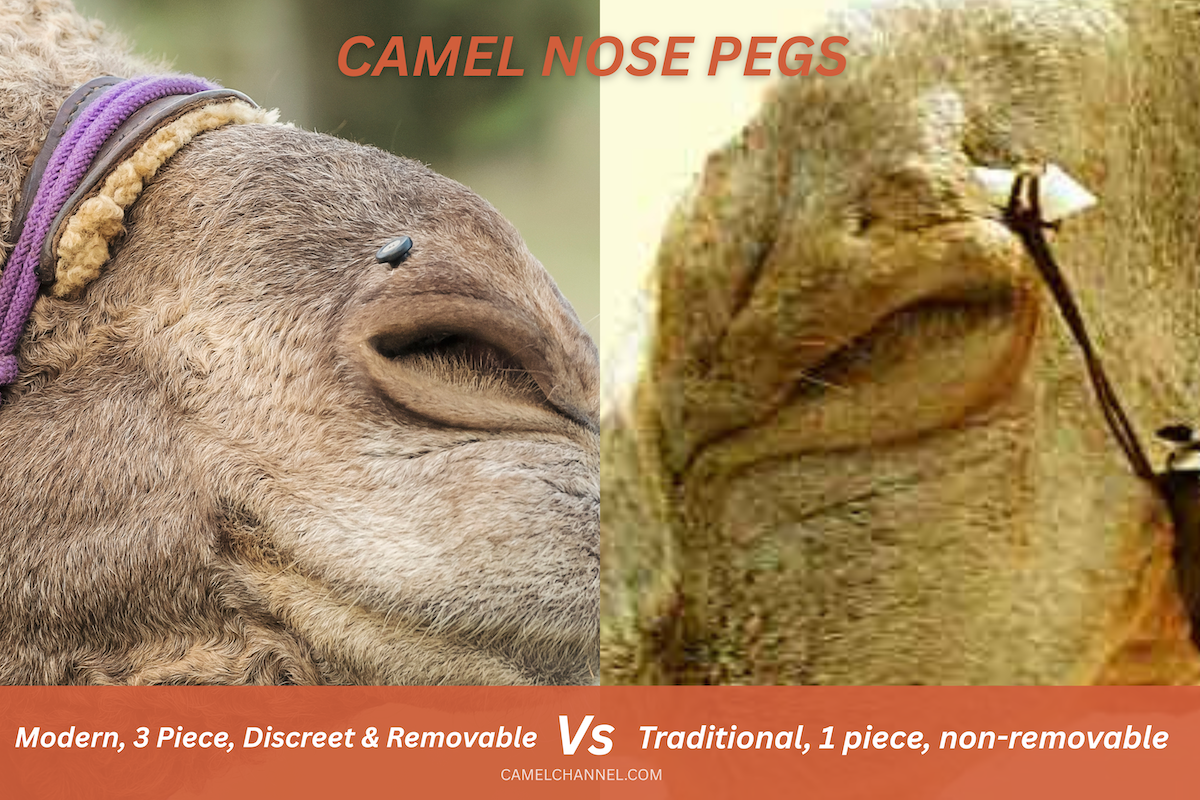
Modern, 3 piece, Camel nose peg made from polycarbonate and removable. Inserted via veterinary and under anaesthetic.
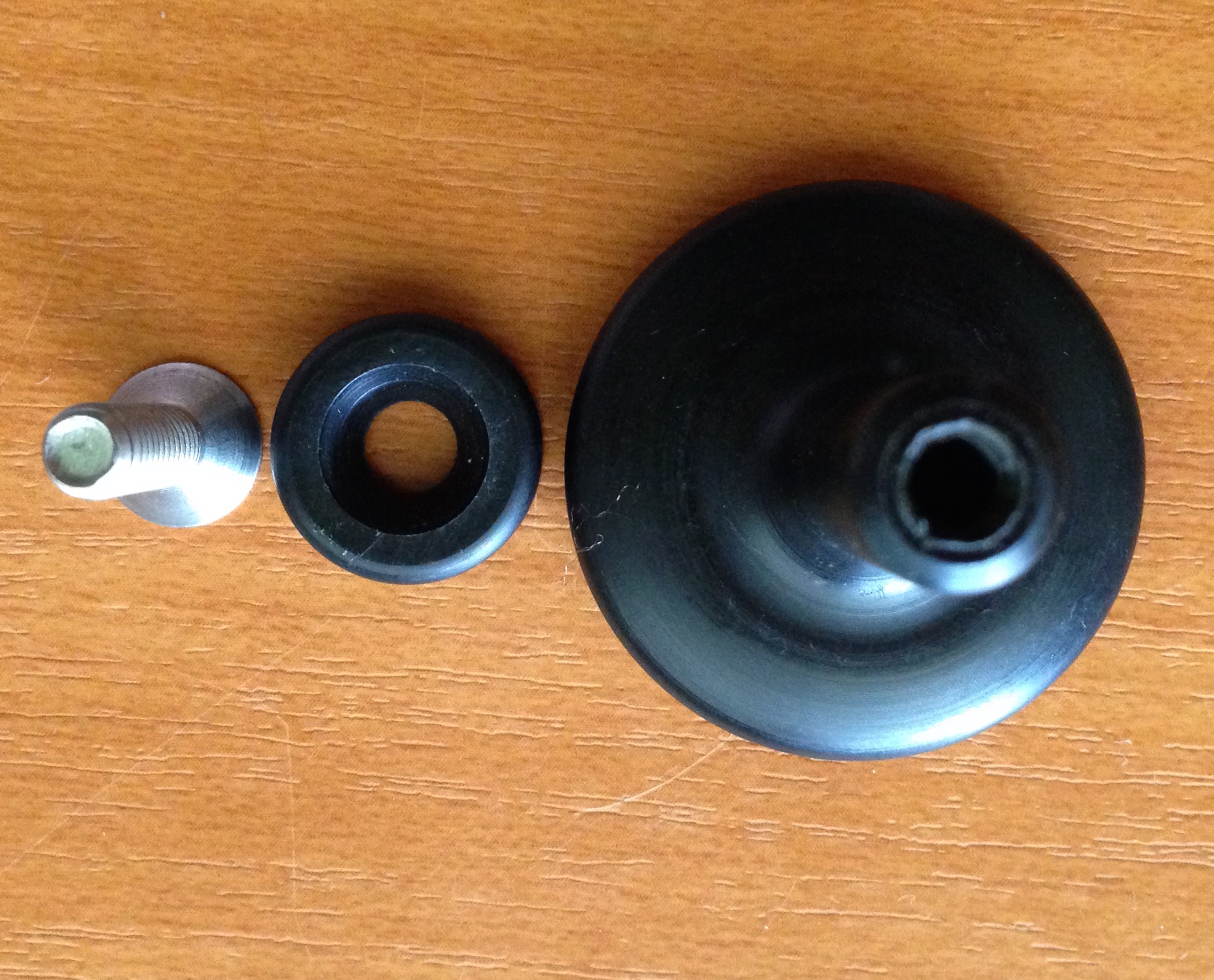
Modern and discreet Camel Nose Peg, Inserted via veterinary, under anaesthetic, all that is required is a small incision into a nose. The screw you see threads into the cylinder, not the camels nose.
The benefits of the modern, 3 piece nose pegs compared to traditional nose pegs:
1. Removable, unlike traditional pegs.
2. Only required a small incision (under anaesthetic), compared to a hole from traditional pegs.
3. Discreet - won't get caught on anything potentially causing injury, unlike traditional pegs.
Owning and handling a camel is a pure delight — but it also comes with a high level of responsibility. That responsibility includes the methods you choose to control and manage your camels.
Whether or not you decide to use a nose peg, the responsibility for the wellbeing of the camel, the handler, and everyone in the camel’s vicinity ultimately rests with you as the owner.
There’s no one-size-fits-all answer, and no single “right” way — only informed, thoughtful decisions.
If you do choose to nose peg your camel, I strongly encourage you to seek professional guidance in both management and handling. Doing it correctly, gently, and with understanding makes all the difference — for your sake, and your camel’s.
And remember, every situation is unique. What works for one person, one camel, or one environment may not be appropriate for another. The choice is yours at the end of the day — and with the right education and support, it’s a choice you don’t have to make alone.
I’m here to help.
Ready to learn the Calm Camel Training Method? Join The Academy now to get instant access (watch video to learn more)


Get Your Free Copy:
Introduction to Camels eBook
We hate SPAM. We will never sell your information, for any reason.

